Capadócia Nordestina: Brazil’s Hidden Rock-Spire Desert
Half Charted — Piauí, Brazil
Capadócia Nordestina: Brazil’s Hidden Rock-Spire DesertBeen there
A ruiniform field of 380-million-year-old rock towers in the Piauí backlands, reachable only through the family who guides it. Here’s what a real visit looks like — access, guide, and the drought story we couldn’t stop thinking about.
Been there. We hiked the site ourselves with the family who manages it. Facts we didn’t witness firsthand are checked against sources and marked as such.
Some links in this article are affiliate links: if you book through them we may earn a small commission, at no extra cost to you.
- Where
- Municipality of São José do Piauí — also known locally as Sítio Luz, Cidade Encantada, or Complexo de Três Irmãos.
- Getting there
- Self-drive is the only realistic option — there’s no public transport or tour-bus infrastructure. It sits roughly between Serra da Capivara and Picos, worth building into a wider Piauí loop rather than visiting on its own.
- Guide
- Mandatory, and access happens by advance scheduling only — no walk-ins, given the drops and crevasses scattered through the site. The land belongs to a family led by Seu Antônio Filho, who has lived here since the 1980s; his family runs the hike and can arrange a farm lunch if you ask ahead. We arranged ours with the site’s manager and guide, Conceição Alves (“Ceiça”).
- Best season
- No official visitor infrastructure here — as with the rest of this part of Piauí, the dry season (roughly May to October) makes for easier, cooler hiking.
- How long
- Half a day covers the hike comfortably, longer if you add the farm lunch.
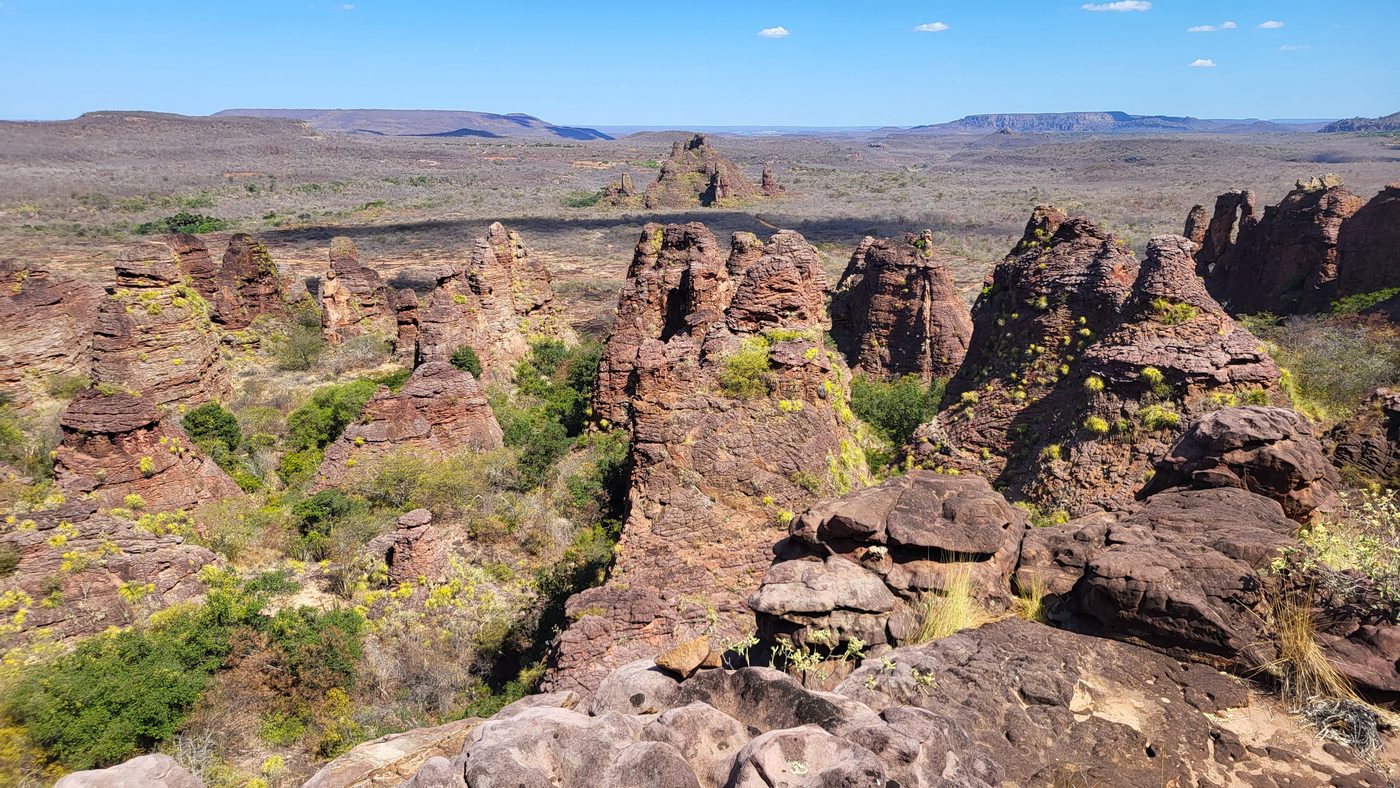
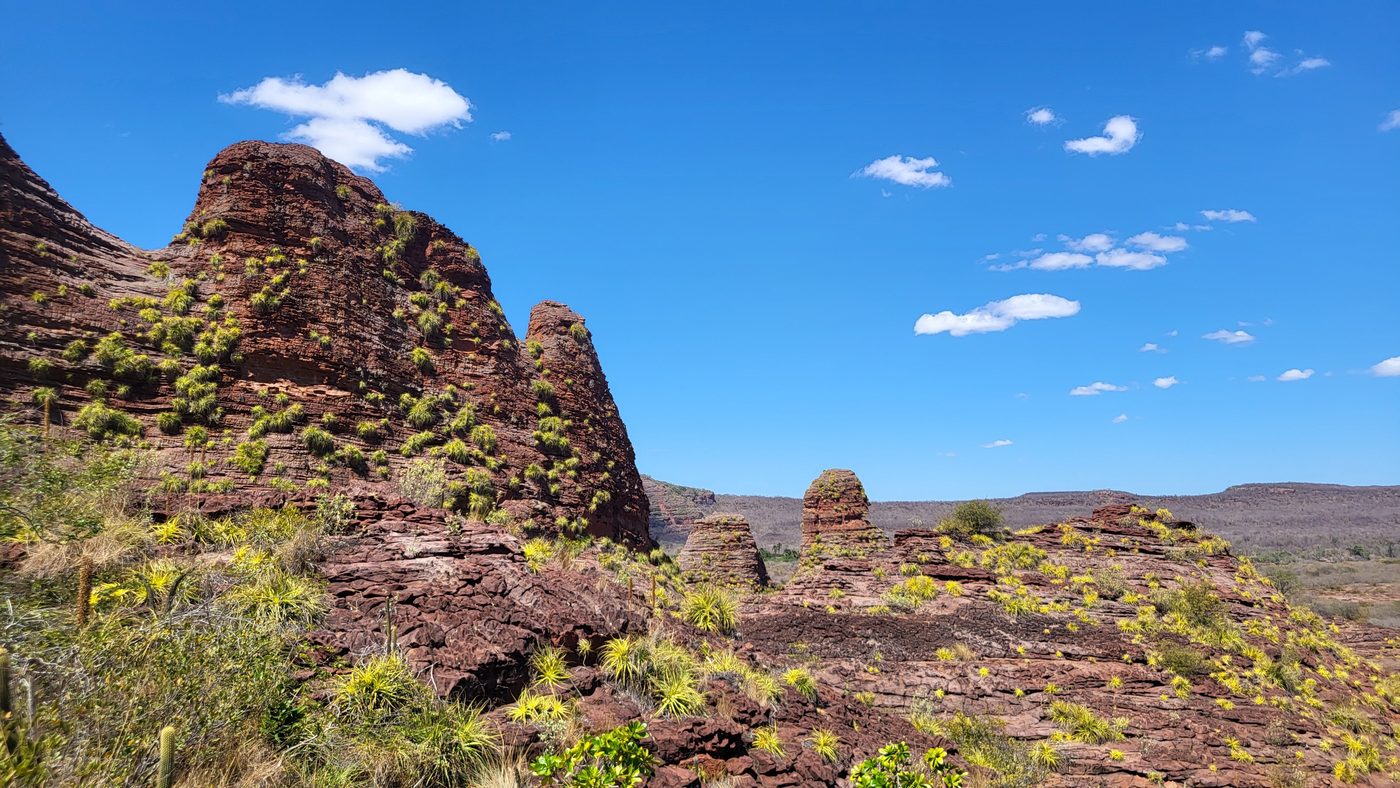
This is the trip’s other real highlight, and it very nearly reads as a footnote if you don’t know to look for it. Officially it’s Capadócia Nordestina (also known locally as Sítio Luz, Cidade Encantada, or Complexo de Três Irmãos), in the small municipality of São José do Piauí — rock walls estimated at over 380 million years old, some reaching 100 meters, carved into a ruiniform, almost lunar landscape since the region was last under a shallow sea in the Devonian period.
Why you can’t just show up
Access only happens through advance scheduling with the site’s guide and manager, Conceição Alves (“Ceiça”) — no walk-ins, given the drops and crevasses scattered through the site. The land itself belongs to a family led by Seu Antônio Filho, who has lived here since the 1980s; it’s their family that opens it up, runs the hike, and can put together a farm lunch if you ask ahead. It turned out to be the trip’s other unmissable stop, not the “one more thing on the way to the hotel” it could easily have been billed as.
Walking among the spires
We drove there ourselves — another genuinely remote spot, with a family living nearby who organizes the hike. Just as under-the-radar as everything else on this trip: we were the only ones there. The hike itself is fairly adventurous, with a bit of climbing involved, but it turned out to be entirely manageable with our 11- and 12-year-olds. The landscape was outstanding all over again — it genuinely felt like walking on the moon. It was hot, but our guide brought water for everyone along the way. You can also arrange lunch on the family’s farm — homemade food, and very good. A superb outing.
The drought and the rain-sounding cactus
One story from our guide has stayed with us. He grew up here through a serious drought — this stretch of Piauí has lived through several brutal multi-year droughts, the 1979–1983 one that hit the state’s semiarid interior especially hard among them, though the length he described to us (something like three years) may just be how it’s remembered rather than the full official span. There’s a cactus common around here — stroke its spines gently and it makes a sound uncannily close to falling rain. During that drought, he told us, local kids had genuinely never heard real rain, so parents used the cactus to show them what it sounded like. And it really does — stand close, stroke it, and it’s rain, more or less exactly.
Capadócia Nordestina was the final stop on a longer, 2,064km loop through Ceará and Piauí — read the full 10-day road trip, including the canyon that nearly stranded us and the oldest rock art in the Americas.
One Comment