Serra das Confusões: Where Two Biomes Collide
Half Charted — Piauí, Brazil
Serra das Confusões: Where Two Biomes CollideBeen there
One of Brazil’s largest stretches of protected Caatinga, with a slot canyon hiding a pocket of humid forest inside it. Here’s what a real day trip looks like — no 4×4 required.
Been there. We did this as a full day trip with a local guide. Facts we didn’t witness firsthand are checked against sources and marked as such.
Some links in this article are affiliate links: if you book through them we may earn a small commission, at no extra cost to you.
- Getting there
- We based out of Caracol, a small town that works well as a jumping-off point for both this park and Cânions do Viana. A regular car handles the route fine — no 4×4 needed here, unlike some other stops in this part of Piauí.
- The route
- The day follows a single named trail, Trilha Cores da Caatinga, threading past Cânions das Andorinhas, a lookout called Janela do Sertão, the Riacho do Boi cave system, and a stretch known as Paredão Verde e Jardim before looping back.
- Guide
- We went with a local guide, Leonardo, arranged in advance through our base in Caracol — worth doing the same rather than trying to self-navigate the park’s trail network.
- Best season
- No official visitor infrastructure here — as with the rest of this part of Piauí, the dry season (roughly May to October) makes for easier, cooler walking.
- How long
- A full day covers the named route comfortably as a single loop.
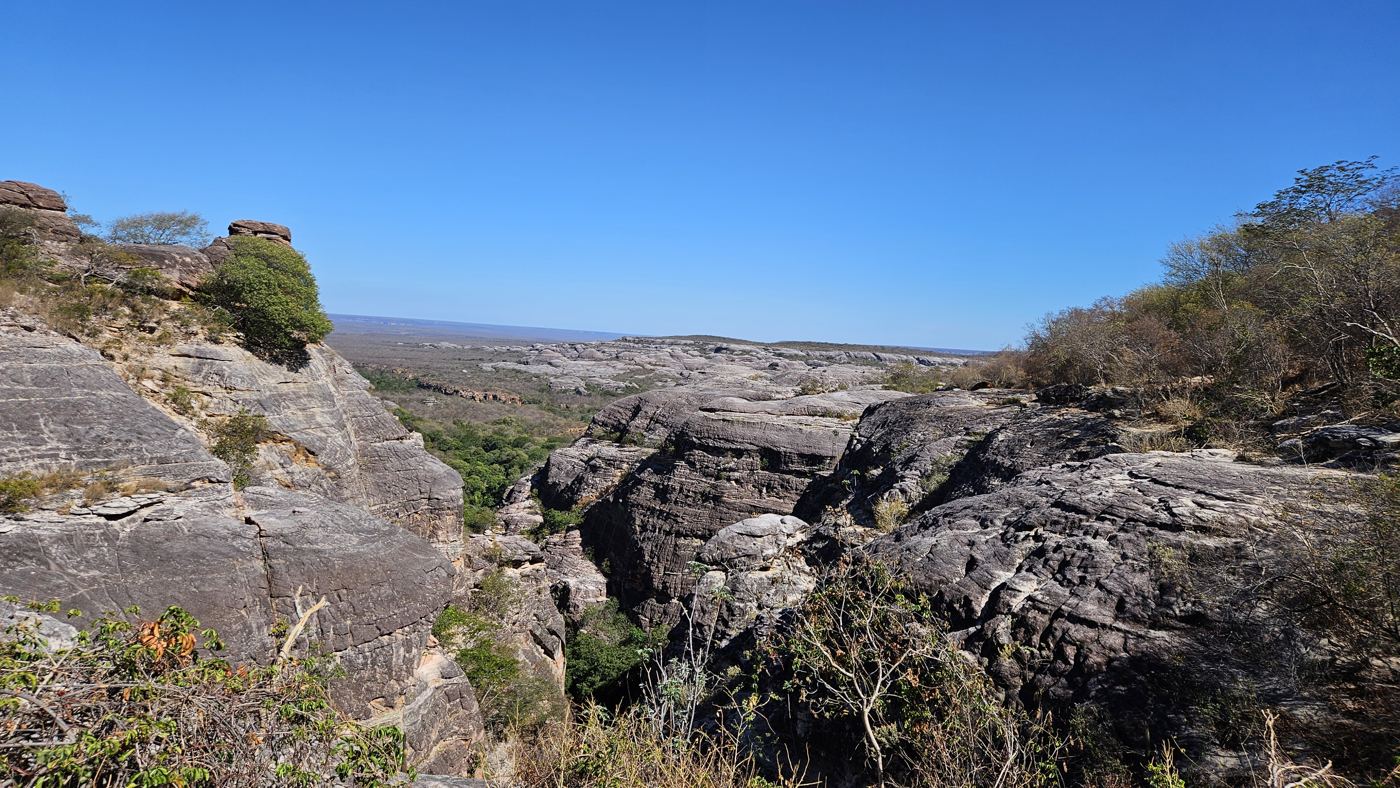
A day trip into Serra das Confusões National Park — accessible by regular car, no 4×4 required. The day follows a single named route, Trilha Cores da Caatinga, threading past Cânions das Andorinhas (canyon walls busy with birdlife), a lookout called Janela do Sertão, the Riacho do Boi cave system, and a stretch known as Paredão Verde e Jardim before looping back. Our own word for the day: “brilliant” — not because it was physically demanding (it wasn’t, unlike some other stops on this trip), but because it was consistently interesting and varied, one good stop after another for the whole day.
Where two biomes meet
Worth a beat on its own: the park sits at a genuine ecological seam. Officially, its biome classification is Atlantic Forest (“Mata Atlântica”), but ecologically on the ground it reads as Caatinga — except in pockets, like around the Riacho do Boi cave system, where humid, Atlantic-Forest-type vegetation survives inside the dry scrubland around it. Reportedly the most pronounced example of this overlap of any national park in Brazil. The Riacho do Boi caves themselves are genuinely impressive to walk through — noticeably cooler inside than the sertão heat outside, part of why that pocket of humid forest survives there at all. The park is younger than it feels: created by federal decree in October 1998, and at over 823,000 hectares it’s one of the largest protected stretches of Caatinga in Brazil. In 2006 an ecological corridor was established linking it to Serra da Capivara, effectively joining the two parks into one continuous protected area.
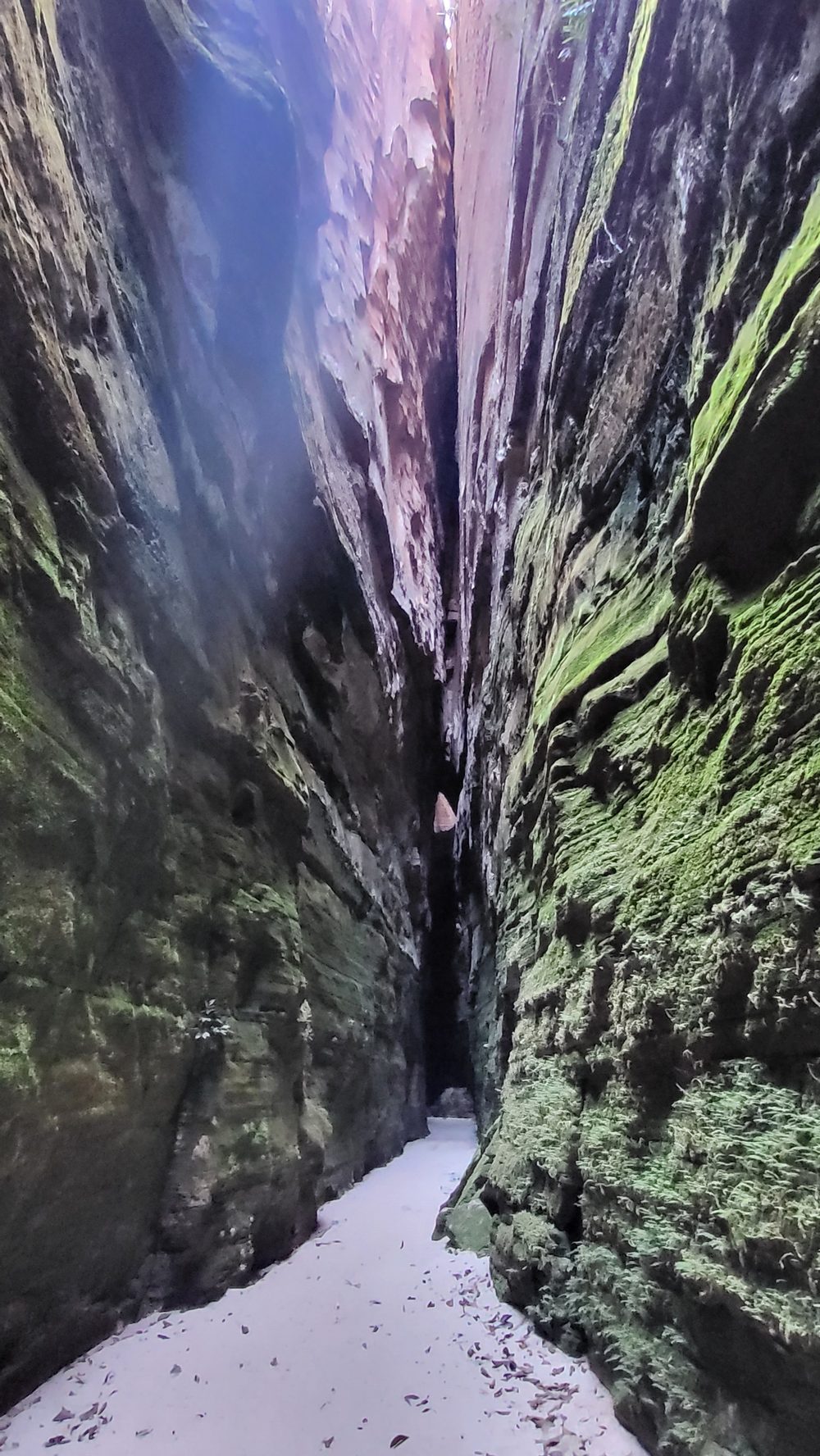
Riacho do Boi, the hidden pocket forest
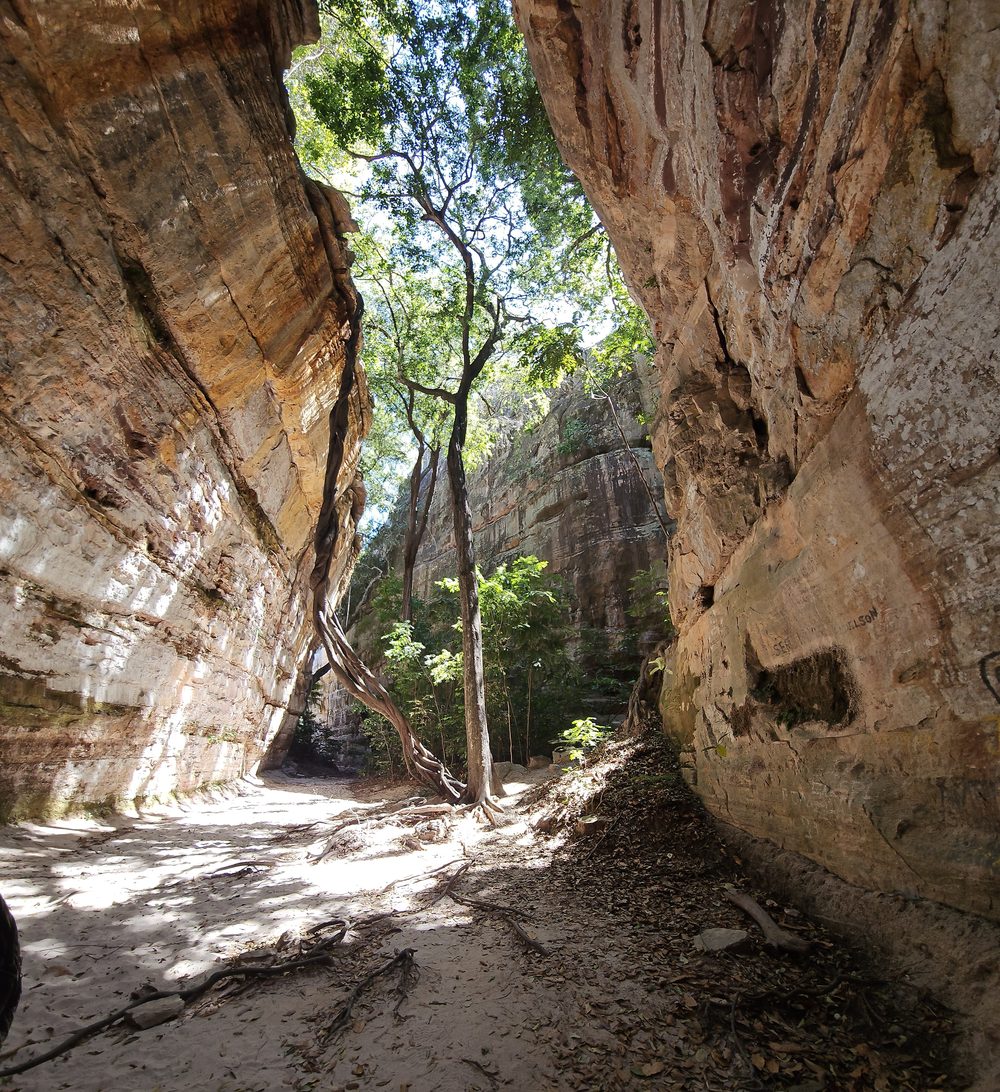
The clearest example of that biome overlap is Riacho do Boi itself — a slot canyon and cave system where a tree grows straight up through a rock-shelter skylight, humid greenery thriving inside otherwise dry sandstone. It’s the single best stop on the route to slow down at.
Serra das Confusões was one stop on a longer, 2,064km loop through Ceará and Piauí — read the full 10-day road trip, including the canyon that nearly stranded us and the oldest rock art in the Americas.